Key Takeaways:
- Delay sprays work by reducing nerve signal intensity through the physical pathway — they turn the volume down on sensation, they don’t mute it entirely. Used correctly, clinical evidence shows they can increase time to ejaculation by two or more minutes and meaningfully improve partner satisfaction rates.
- Lidocaine vs. benzocaine matters for your specific situation. Lidocaine (Promescent, Stud 100, K-Y Duration) absorbs deeper and lasts longer — more effective but less forgiving with dosage – if you apply too much, it won’t be pleasurable and possibly can’t maintain. Benzocaine (VigRX Delay Spray) is more superficial, gentler, and the safer choice if you’re on medications that interact with lidocaine. If you have no allergy concerns, Promescent is the best-formulated lidocaine option. VigRX is the benzocaine benchmark.
- With benzocaine, if you apply slightly more than you needed, the effect is a bit stronger than ideal but manageable — you’re still functional. With lidocaine, because it absorbs faster and deeper, overshooting the dose by even a spray or two can tip you from “pleasantly reduced sensitivity” into “can’t maintain an erection” territory. The margin for error is smaller, so getting the dose right matters more.
- Dosage discipline is everything. Mike, 38, came to me after two years of escalating Stud 100 use — started at two sprays, was up to five, duration was actually getting worse because the performance anxiety around whether he’d applied enough was itself accelerating ejaculation. The spray was masking the problem while the underlying issue compounded. One to two sprays, full 10-minute wait, wipe excess before sex. That’s the protocol. More is not better.
- Always patch test first — apply a small amount to your forearm and wait 20 minutes before using on penile tissue. Irritation on your forearm is inconvenient. Irritation elsewhere is considerably worse.
- If your partner has any anesthetic sensitivity, use a condom. Even after wiping, trace transfer is possible. My student Derek, skipped this step once and spent the next 20 minutes dealing with his partner’s very reasonable complaint. Don’t be Derek.
- Tauro and botanical alternatives are worth considering only if you have confirmed anesthetic allergies — the herbal formula produces a milder effect and the paraben content is a legitimate concern for regular long-term use.
- Delay sprays address the physical pathway only. They do nothing for performance anxiety, dopamine desensitization, hypertonic pelvic floor, or the neurochemical drivers of PE. In my client tracking, men who used sprays alongside a proper training program compounded their gains over time. Men who used sprays as their entire strategy plateaued — and often got worse as anxiety about the spray itself became its own trigger.
A delay spray can buy you time. What my course builds is the actual system underneath — the nervous system training, the pelvic floor sequencing, the arousal awareness work that changes your baseline so you eventually don’t need the spray at all. If you want the full system I use with clients — breathing protocols, the reverse kegel sequence, arousal scale training, all of it — it’s laid out step by step in my course – “Last Longer Naturally: A Men’s Health Guide to Overcoming Premature Ejaculation“.
Let me be upfront about something before we go any further. Delay sprays are not a cure for premature ejaculation. They are a tool — a useful one when used correctly, a frustrating one when misunderstood — and the difference between those two outcomes usually comes down to whether a man understands what he’s actually buying. I’ve had clients come to me after months of using delay sprays with no lasting improvement, convinced they were broken. They weren’t. They just didn’t understand the mechanism, so they were using the product wrong and expecting the wrong things from it.
This article is about what delay sprays actually are, how they work, which ones are worth your money, and — honestly — when they’re not the right tool at all. I’d rather you leave here knowing the full picture than spend $40 on something that doesn’t solve your problem.
Contents
What Is a Delay Spray?
They go by a lot of names — PE spray, premature ejaculation spray, desensitizing spray, delay spray. They all refer to the same basic product: a topical spray applied to the penis before sex that slightly numbs the nerve endings responsible for triggering ejaculation, allowing a man to last longer without finishing as quickly.
“Slightly” is the key word there. The goal isn’t to make you feel nothing. It’s to reduce the intensity of the physical stimulus coming through the physical pathway (the nerve signals traveling from your penis through the spinal cord to the brain) enough that you have more time before the ejaculatory reflex fires. Think of it as turning the volume down a few notches, not muting the track entirely.
The clinical evidence on these products is actually pretty solid. A 2016 study on Promescent — one of the better-known lidocaine-based sprays — found that 65% of participants’ partners achieved orgasm during sex while using the product, compared to around 44% without it. A separate study using an equivalent lidocaine dose saw 80% of participants increase their time to ejaculation by more than two minutes. Those are meaningful numbers, not marketing fluff.
Some men also report more intense orgasms when using a delay spray correctly, which seems counterintuitive but makes sense when you think about it — the pleasure builds more gradually over a longer period, so the finish is more satisfying. Derek, 41, who came to me after years of avoiding intimacy because of PE, described it this way: “I always assumed numbing meant less enjoyment. But when I’m not panicking about finishing too fast, I’m actually in the experience for the first time.”
Lidocaine vs. Benzocaine — The Difference That Actually Matters
Almost every delay spray on the market uses one of two active ingredients: lidocaine or benzocaine. Both are local anesthetics. Both numb the area. But they work differently in ways that matter for both safety and effectiveness.
Lidocaine belongs to the amide class of anesthetics (a chemical family that includes bupivacaine, ropivacaine, and prilocaine). Benzocaine belongs to the ester class (which includes procaine, tetracaine, and chloroprocaine). The distinction matters because allergies tend to be class-specific — if you’ve had a reaction to one amide anesthetic, you may react to others in the same class, but you’re probably fine with esters, and vice versa.
In terms of effectiveness, most testing — including my own observations with clients — shows lidocaine performing slightly better than benzocaine, but not dramatically so. The more meaningful practical differences are these:
Lidocaine absorbs faster and deeper into penile tissue, which means it reaches more nerve endings but also means it can affect more nerves than strictly necessary if overused. Benzocaine absorbs more slowly and stays more superficial, which gives you slightly less numbing effect but also less risk of going too far. Lidocaine’s numbing effect also lasts longer than benzocaine’s, which means benzocaine-based products sometimes need reapplication during longer sessions.
Dr. Fisch, a urologist who’s written extensively on this topic, has argued that benzocaine is actually the safer choice for most men specifically because it doesn’t penetrate as deep. His concern with lidocaine — especially water-soluble or eutectic formulations — is that they affect more nerve tissue than necessary and there are limited long-term safety studies. I think his concern is valid as a general caution, but it applies mostly to poorly formulated products or significant overuse. A well-designed lidocaine product used correctly is safe for the vast majority of men.
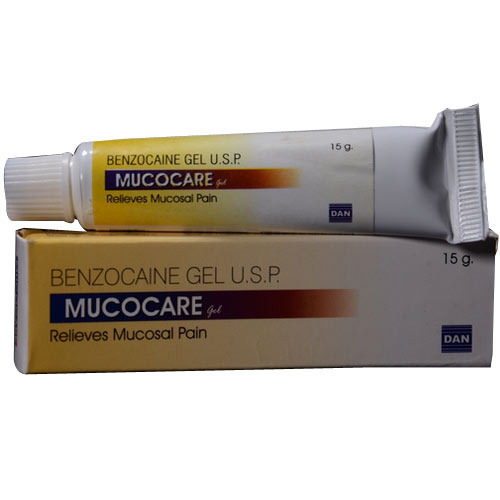
One safety note that’s non-negotiable: there is a rare but real risk called methemoglobinemia (a condition where the blood loses its ability to carry oxygen properly) when topical anesthetics interact with certain medications. The medications of concern include nitrates, some antibiotics, antimalarials, and anticonvulsants. This risk is associated almost entirely with benzocaine in medical literature, not lidocaine — but if you’re on any of these medications, talk to your doctor before using any delay spray.
Before using any delay spray for the first time, test a small amount on your forearm and wait 20 minutes. Better to have a minor skin reaction on your arm than on significantly more sensitive anatomy.
The Brands — What’s Actually Out There
Promescent
The one that gets the most attention, and for good reason. Promescent uses lidocaine with what they call TargetZone technology — essentially a formulation designed to control how deep the lidocaine absorbs, so you get effective numbing without going so deep that it affects more nerves than needed. In testing, Promescent absorbs more thoroughly into the skin than most competitors, which also reduces the risk of transferring the anesthetic to your partner.
The spray nozzle itself is better designed than most competitors — not too broad, not a single stream, which makes application accurate. You typically only need one to two sprays, applied about 10 minutes before sex, which makes a bottle last longer than the price tag initially suggests. Apply, wait for absorption, wipe off any excess, then proceed.
The one formulation note worth flagging: Promescent contains macadamia nut oil. Negligible concern for most people, but if you have a tree nut allergy, worth checking with your doctor first.
My overall take: the best lidocaine-based spray available. If you want a lidocaine product, this is the one to buy. I’ve recommended it to several clients as a situational tool alongside their behavioral training, and the feedback has been consistently positive when it’s used correctly — meaning as a complement to the real work, not a substitute for it.
VigRX Delay Spray
The most credible benzocaine option on the market. VigRX uses benzocaine rather than lidocaine, which makes it the safer choice for men on medications that interact with lidocaine, and the preferred option for anyone who wants a more superficial numbing effect. The tradeoff is that it requires more sprays — typically three to four — to achieve the same effect as one to two of Promescent, which affects cost-per-use calculations.
The spray nozzle is a straight-line stream rather than a pattern, which makes it slightly less forgiving on application. And because benzocaine absorbs more slowly, the waiting period before intercourse is a bit longer. But for men who find lidocaine too aggressive or who have had sensitivity issues with other products, VigRX is a solid reliable alternative.
Cost-per-use is actually lower than Promescent on a per-spray basis, though the bottle price is higher. If you’re going to be using this regularly and on a budget, the math works out reasonably well over time.
Stud 100
One of the oldest delay sprays on the market — it’s been around for decades. Uses lidocaine at a fairly high concentration. What Stud 100 lacks is the sophisticated delivery technology of Promescent, which means the lidocaine absorption is less controlled. You can absolutely use it, but the margin between “enough” and “too much” is narrower. Start with the minimum recommended sprays and work up slowly. I’ve had clients report that Stud 100 worked well when they were careful with dosage, and worked disastrously when they assumed more was better.
The horror stories you occasionally read online about men losing erections for a day after using a lidocaine spray — those are almost always Stud 100 or similar uncontrolled-formulation products used in excess. The problem isn’t lidocaine per se. It’s lidocaine without proper delivery control, used at too high a dose.
K-Y Duration Spray
A widely available lidocaine-based option from a mainstream brand, which means you can find it in most pharmacies without ordering online. The formulation is straightforward and it works. It’s not as sophisticated as Promescent in its delivery mechanism, but for men who want something they can pick up locally without waiting for shipping, it’s a legitimate option. Application is similar to Promescent — spray, wait, wipe excess, go.
Hims Delay Spray / Wipes
Worth noting that Hims has discontinued its delay spray and now only offers PE wipes. The wipes use benzocaine and work on the same principle — apply to the penis, wait for absorption, proceed. Less precise than a spray for covering specific areas, but some men find wipes easier to use and less intimidating than a spray bottle. The Hims platform is also notable for its telehealth infrastructure — you can talk to an actual doctor about your PE, which is genuinely useful if you’re not sure whether a delay product or a prescription approach is more appropriate for your situation.
Viga 50000
A benzocaine-based spray that appears frequently in comparison lists. Reasonably effective for men who want a gentler effect — the lower concentration makes it forgiving for first-time users who aren’t sure how their body will respond. Not my first recommendation for men with significant PE, but for someone who wants to dip their toe in and see how they respond to desensitization, it’s a sensible starting point.
Tauro Extra Strong Delay Spray
Tauro Extra Strong Delay Spray takes a different approach to most sprays on this list — instead of lidocaine or benzocaine, it uses a botanical formula built around Panax Ginseng, Ginkgo Biloba, Hedera Helix, Trigonella, and Chamomilla extracts. That’s a legitimate selling point for the roughly 2-3% of men who have reactions to anesthetic-class numbing agents and need a caine-free alternative. The problem is that the “more natural” positioning doesn’t survive full scrutiny of the ingredient label — the formula contains four different parabens, which have faced increasing scientific scrutiny over potential hormonal disruption effects, and that’s a meaningful tradeoff to accept in exchange for avoiding lidocaine. In my assessment, the botanical extracts produce a milder numbing effect than a well-formulated lidocaine or benzocaine spray, which means it’s more forgiving for men who’ve had over-numbing issues with other products, but less reliable for men with significant PE who actually need a meaningful desensitization effect. Customer reviews are mixed enough that I’d treat it as a trial option for men with specific anesthetic sensitivities rather than a general first recommendation — and I’d rate it considerably below both Promescent and VigRX for the average user. If you have no reaction concerns, the caine-based options outperform it. If you do have allergy concerns, it’s worth trying — but go in with tempered expectations and watch the paraben question if you’re using it regularly long-term.
Super Dragon 6000 / Deadly Delay 48000 and Similar
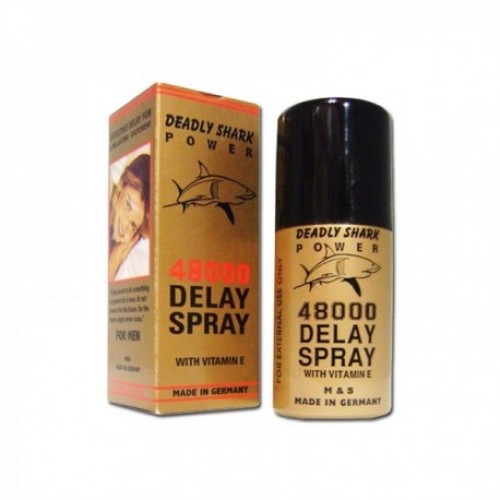
I’m going to be direct: the number in the name is marketing. Super Dragon 6000 and products like it are not meaningfully different from the other sprays in terms of mechanism — they use the same lidocaine or benzocaine at similar concentrations. The names are designed to sell products to men who are anxious and want something that sounds powerful. Some of these are fine products. Some are not well-formulated. Without independent testing of the specific formulation, I’d steer toward established brands with clearer ingredient transparency rather than products whose primary selling point is a dramatic name.
Adam and Eve Marathon / Other Benzocaine Alternatives
For men with a confirmed lidocaine allergy, benzocaine-based sprays are the appropriate category. Adam and Eve Marathon is one of the few pharmaceutical-grade benzocaine sprays available. Works reliably, formulated carefully, good option for this specific population. Not a first-line recommendation otherwise, but valuable for men who need it.
Delay Wipes (General Category)
Delay wipes — single-use wipes pre-soaked with benzocaine or laureth-9 — are worth mentioning as a category because some men find them more convenient and less intimidating than sprays. They’re less precise in coverage and often require a longer wait time than sprays, but the portability advantage is real. EXS makes a version using clove oil rather than a synthetic anesthetic, which produces a similar mild numbing effect through a natural route. The numbing effect is gentler, which makes it better suited to men who find synthetic anesthetics too aggressive.
How to Use a Delay Spray Correctly
Most men who have a bad experience with delay sprays either used too much or didn’t wait long enough. Both are fixable problems.
The standard protocol I recommend: apply one to two sprays to the head of the penis (the most nerve-dense area — this is where you want the effect). Wait 10 minutes. Wipe off any excess with a clean cloth before intercourse. If you’re using a condom, you can skip the wiping step since the condom will prevent transfer to your partner — but still wait the full 10 minutes for absorption.
Do not exceed the recommended dose on the first use. The most common mistake is men applying too much because they’re anxious and want a stronger effect, then finding they’ve numbed themselves to the point where maintaining an erection is difficult. Start at the minimum and adjust from there over multiple sessions.
If your partner is sensitive to topical anesthetics, use a condom. Even after wiping, trace amounts can transfer and cause irritation. This is a genuine safety consideration, not just a precaution for legal coverage.
What Delay Sprays Don’t Fix
This is the section that matters most, and the one that gets left out of most delay spray reviews because it’s not useful for selling products.
Delay sprays address the physical pathway — they reduce the nerve signal coming from penile sensation. They do nothing for the mental pathway. If your PE is primarily driven by performance anxiety, the sympathetic nervous system flooding your body with stress hormones, dopamine desensitization from pornography use, or a hypertonic pelvic floor — a delay spray will give you a few extra minutes but won’t address what’s actually causing the problem.
I keep a spreadsheet of client outcomes. The clients who’ve used delay sprays as part of a broader training program — alongside breathing work, pelvic floor conditioning, and arousal awareness training — report meaningful, compounding improvements over time. The clients who’ve used delay sprays exclusively report plateau effects: the spray works for a while, then they habituate to it and start needing more, and eventually the underlying problem reasserts itself because nothing about the underlying problem changed.
One client — Marcus, 38 — came to me after two years of relying exclusively on Stud 100. He’d started at two sprays, was at five, and felt he was heading toward complete numbness. His duration had actually decreased over time because the anxiety around whether he’d applied enough was itself a sympathetic trigger that was accelerating ejaculation. We stopped the spray entirely, did eight weeks of behavioral training, and he’s now at 15-20 minutes without any desensitizing product. The spray was masking the problem while the problem got worse underneath.
The role I actually recommend delay sprays for is situational support during the training period — high-stakes nights, new partner anxiety, occasions where the psychological pressure is unusually high. Not as a daily crutch. Not as the entire strategy.
The Serotonin Question — What Prescription Options Do That Sprays Don’t
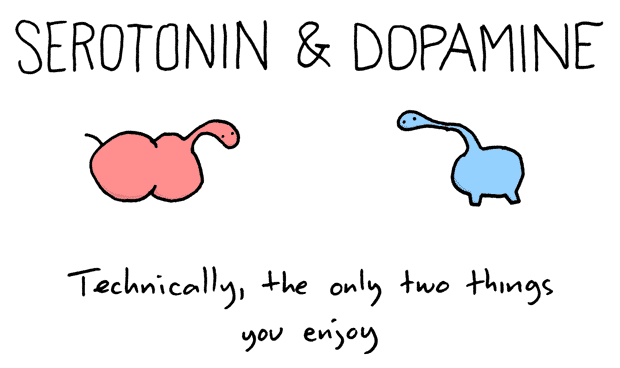
Since we’re being comprehensive: the other major pharmacological approach to PE involves SSRIs (selective serotonin reuptake inhibitors — medications that increase the amount of serotonin available in the brain), the most PE-specific of which is Dapoxetine (sold as Priligy). Higher brain serotonin is associated with delayed ejaculation — it’s the “calm and satisfied” neurochemical that counterbalances the excitatory dopamine response during sex.
Dapoxetine works on a completely different mechanism than delay sprays. The spray reduces physical nerve sensitivity. Dapoxetine changes the neurochemical environment in the brain that governs the ejaculatory reflex. They’re not competing — they’re addressing different parts of the same problem. Dapoxetine is not approved in the US but is available in many other countries by prescription. It requires a doctor’s visit and comes with real side effects that need to be weighed carefully. I’m not in the business of recommending prescription medications — that’s your doctor’s job — but I mention it because any honest comprehensive guide needs to acknowledge it exists.
The natural alternative that addresses similar neurochemical mechanisms without prescription requirements is ProSolution Plus — a multi-ingredient supplement that includes ashwagandha (withania somnifera), which has a published study confirming it increases serotonin in the brain, along with Mucuna Pruriens which supports dopamine regulation. The combination works on the dopamine-serotonin balance in a way that no topical spray can. Slower to take effect than either a spray or Dapoxetine, but the mechanism is real and the ingredient evidence is solid. I’ve written a more detailed review of ProSolution Plus separately if that’s the direction you’re heading.
The Bottom Line
If you want a delay spray recommendation: Promescent if you’re going lidocaine, VigRX Delay Spray if you want benzocaine or have lidocaine sensitivity concerns. Those are the two I’d actually hand to a client. Everything else in the market is either a version of one of these two, worse-formulated, or differently-named without meaningful differentiation.
Use it correctly — minimum dose, full wait time, wipe before sex or use a condom. Adjust dosage over multiple sessions, not in a single night. And be honest with yourself about whether you’re using it as a tool while you do the real work, or using it to avoid doing the real work.
The spray handles the moment. It doesn’t change the system that’s creating the moment in the first place. Both things matter — but they’re not the same thing.